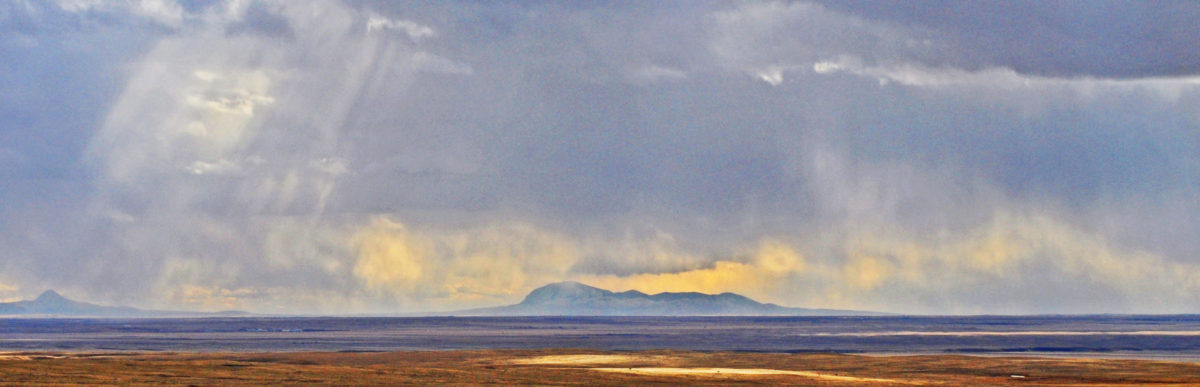
about the path

Week 27  Proverbs

A couple of days ago I calculated that Solomon used the words path or paths about 25% of all the times it’s used in the bible. I reread the verses (there’s maybe 20 of them) looking for things that explained something about the path.
The path of the righteous is like the light of dawn, shining brighter and brighter until midday.
So there’s an element of progress & enhancement when I travel the path. Degree-of-brightness isn’t uniform. Currently things aren’t as bright as they will be eventually. As I travel the path things brighten.
The path of the upright is a highway (but a slacker’s way is like a thorny hedge).
The path here is called a highway because it’s open. Accessible. Uncluttered (unlike the other route with its obstacles).
For the prudent (person) the path of life leads upward, so that he may avoid going down to Sheol.
I clarify this verse for myself by paraphrasing it: the path of life leads upward to life but the path of death leads down to the realm of the dead. So there’s a clear choice of paths & destinations.
The (person) who follows instruction is on the path to life.
This verse is very useful. There’s a kind of ‘geographic’ positioning test to verify the path I’m on. Q: how do I know if I’m on the path to life? A:  I’m following instructions.

Note: quotes from Proverbs 4:18 15:19 (rearranged) 15:24 (CSB & MHJ) 10:17 (CSB). Reading report for June – 70% completed.


a path to take

Week 26  Proverbs 2

Solomon talks here about two paths – there’s his recommended Path-to-Take and then there’s the undesirable (and dangerous-looking) Path-to-Avoid.
The two paths are completely different. For instance when he talks about the Path-to-Take he calls it:
A path of justice
A path of uprightness
A path of life
The path of the righteous.
By contrast he says that the Path-to-Avoid is:
The way of evil
The way of darkness
A path that’s crooked
A track that leads to death.
Looking at the lists it’s easy to see big & serious-looking differences between the two paths. But even though it’s pretty clear that Solomon is endorsing his preferred Path-to-Take he still recognizes that people have an option. They get to make their own choice.
One of the reassuring things I noticed was what Solomon says about moving along the Path-to-Take. The Lord acts as a shield to those who walk in integrity, guarding the paths of justice and watching over the way of his saints. So it’s a huge advantage for people who are on that path – the Lord is acting as their shield & guard & protector.
I also notice that Solomon doesn’t spell out comprehensively how the Lord’s assistance takes shape. For instance he doesn’t say whether the Lord’s shielding function will protect me from – let’s say – cancer cells. So Solomon is definite about the Lord’s help…but he’s non-specific about it too.

Note: the Path-to-Travel list is from Proverbs 2:8 13 19 20. Path-to-Avoid list: Proverbs 2:12 13 15 18. Quote from Proverbs 2:7-8 (ESV)

recommended route

Week 26  Proverbs 1

One of the first pieces of advice that Solomon tells readers is to steer clear of a class of people that he identifies as ‘sinners’: do not walk in the way with them. Keep your feet from their path.
Other versions agree:
don’t travel that road with them or set foot on their path
do not walk in the way with them; hold back your foot from their paths
do not go along with them, do not set foot on their paths.
Each version uses the same figure-of-speech – a ‘path’ or ‘paths’ – to talk about the route I should be looking for to avoid travelling in the company of this group of people Proverbs calls ‘sinners’.
I do a quick count. ‘Path’ is used about 32 times in the bible – eight times in Proverbs. ‘Paths’ 44 times – thirteen times in Proverbs. Proverbs uses the picture of a pathway >25% of the times it’s used in the bible. Solomon doesn’t overuse it…but it’s one of his repeater ideas.
While I’m looking up references I see that two paths are identified: a) there’s the path that ‘sinners’ travel (keep off the path of the wicked) and b) there’s a path for ‘non-sinners’ (the path of the righteous is like the light of dawn).
One way to read Proverbs is to think of it as a kind of roadmap for taking a recommended path. And an travel advisory of one to avoid.

Note: quotes from Proverbs 1:15 (NASB CSB ESV NIV) & 4:14 18 (CSB)

than meets the eye

Week 26  Proverbs 1

The first six verses are Solomon’s introduction to the Proverbs. In my bible that paragraph is one long sentence and it names some of the benefits that I can get from reading the proverbs. It ends with this: to understand a proverb and a figure, the words of the wise and their riddles.
I normally think of the proverbs as a book of sayings that are pretty straightforward & clear & uncomplicated. A lot of them are easy enough for a kid to understand. But however simple the proverbs seem to be Solomon says they also have this riddle-quality to them.
I looked up ‘riddle’. The dictionary said that a riddle is a saying that has to be solved because it has a hidden meaning. A riddle is tricky. I need some ingenuity to dope it out.
I check other bible versions. About 30 of them use the word riddle. The other versions use words or phrases that are different…but have the same idea: dark sayings. Puzzles. Enigmas. Clever messages.
That’s not to say proverbs aren’t straight-ahead literal sayings. But maybe they’re layered sayings too. They have a plain & simple surface but lying underneath is a more complicated subsurface. Maybe they make good & common sense. But there’s more to them than meets-the-eye.
Head-scratchers disguised as vanilla-flavoured platitudes.

Note: quote from Proverbs 1:6 (NASB)

a lifebuoy

Week 25  Jeremiah 26

The Lord told Jeremiah to go to the temple and give a public prophecy. But prior to going he tipped Jeremiah off about what might happen: perhaps the people will listen and turn—each from his evil way of life—so that I might relent concerning the disaster that I plan to do to them because of the evil of their deeds. So the situation was fluid & open-ended.
The backstory to Jeremiah’s prophecy was pretty typical:
• The people had already done a lot of evil things
• The Lord was planning a calamity against them
• Prior to the disaster Jeremiah was to go with a warning message
• The people could listen to Jeremiah’s message.
It was at that point that the people got to decide one way or the other. They could either a) listen and turn from their evil ways or they could b) disregard Jeremiah.
If they shrugged off Jeremiah’s warning then the Lord’s projected plan would simply move forward as it was designed.
But if they turned then the Lord would change his plan. A catastrophe would be avoided.
So there were choices and interactivity and adjustments and adaptation that would be in play here. It wasn’t a static situation.
And quite a bit would be hanging in the balance.

Note: quote from Jeremiah 26:3 (CSB)

following steps

Week 25  Jeremiah 22

Jeremiah was prophesying during the days of the last five kings of Judah: Josiah Jehoahaz Jehoiakim Jehoiachin & Zedekiah. Not all of them are named there in the introduction in chapter 1. Jehoahaz & Jehoiachin are missing. But they both show up later in chapter 22.
What I noticed in 22 was Jeremiah’s comment about Jehoahaz. I already know that Jehoahaz – just like Jehoiakim Jehoiachin & Zedekiah – was a low quality & substandard king. But Jeremiah contrasts him with his father Josiah (too bad for Jehoahaz since I think his dad was maybe the best of the kings).
Jeremiah asks Jehoahaz: did not your father eat and drink and do justice and righteousness? Then it was well with him. He judged the cause of the poor and needy; then it was well. Is not that what it means to know Me?” But Jeremiah’s description of Jehoahaz was different: you have eyes and heart only for your dishonest gain, for shedding innocent blood, and for practicing oppression and violence.
What does it mean to follow the Lord? Being just. Being righteousness. Being fair to poor people.
I’m more than a thousand pages into the bible and I know for a fact that there’s more to following-the-Lord than this short list.
But Jeremiah limited himself to these three: 1) doing justice & 2) doing righteousness & 3) judging poor people fairly.
Doing good. Doing right. Helping people. A short list of things that signal I’m a follower.

Note: quotes from Jeremiah 22:15-16 17 (ESV)

strange work

Week 24  Isaiah 28

Isaiah says something pretty interesting when he says that the Lord – at a certain point in time – will begin to do His task, His unusual task, and to work His work, His extraordinary work. When things are going along in their regular routine way then the Lord is operating in his normal way. His predictable & expected way. Doing the kind of things you’d expect the Lord to do. The Lord’s normal work is just that – standard regular typical & routine. It’s regularity is so regular that it seems like life in the world is on auto-pilot. A fixed recurrency. And while this is going on the Lord is keeping a pretty low profile. Maybe for a long time.
But nothing goes on forever and at some point it’s time for an assessment & review. At that point the Lord moves into his judicial function – which is quite a different category of work. The activity of the Justice Department is unusual & extraordinary work.
I checked a couple of other versions. They used different words but the idea was the same. That this part of the Lord’s work was incredible. Unexpected. Unfamiliar. Strange. Alien. I didn’t see worrisome. Or troubling. But I got that sense too.
So anyway the Lord engages in two kinds of action (maybe there’s more but there’s at least two). There’s a) the Lord’s normal & familiar & customary work and b) his strange & unusual work.

Note: quote from Isaiah 28:21 (NASB plus Amplified CSB ESV & NIV)

Lucifer

Week 23  Isaiah 13-14

There’s a prophecy about Babylon in Isaiah 13 & 14. It’s roughly 45-verses long and one of the things Isaiah says is: how you have fallen from heaven, you star of the morning, son of the dawn! You have been cut down to the earth, you who defeated the nations!
The tricky thing here is the expression you star of the morning. I checked a bunch of other bible versions and I found that about 13 of them (roughly 25%) used the name Lucifer instead of star of the morning.
It’s a bit of a mystery because the prophecy is against the king of Babylon and I figure that the natural way to understand this verse is that Isaiah was saying that the king (the star-of-the-morning) was going to be defeated (fall from-the-sky).
The more complicated way is to say that the star of the morning is not the king. It’s actually Lucifer (Satan). The 13 versions that use Lucifer figured that Isaiah quit talking about Babylon and suddenly started talking about the Devil.
So I’m left to wonder: who is Isaiah talking about? Was it about the king of Babylon? Or did Isaiah switch-gears and start talking about Lucifer the Devil?
Obviously some Bible versions think he switched and so they write it up that way (star-of-the-morning = Lucifer / Satan). But that seems like the translator went out-on-a-limb.
I think Isaiah is totally capable of changing lanes without telling me. I’m just not sure he’s doing that here.

Note: quote from Isaiah 14:12 (NASB)


time of publication

Week 23  Isaiah 1

The vision of Isaiah the son of Amoz, which he saw concerning Judah and Jerusalem in the days of Uzziah, Jotham, Ahaz, and Hezekiah, kings of Judah. That’s the first verse of Isaiah’s long prophecy. It says that Isaiah’s oracles were specifically for Judah & Jerusalem. And the timeframe was during the reigns of four kings – Uzziah Jotham Ahaz & Hezekiah.
If Isaiah had divided his 66 chapters equally among the four kings each would have gotten 25% of the book – 16.5 chapters each. But that number isn’t even close. I checked a word book to see how much space each king got:
• Uzziah is named twice…nothing else is said about him.
• Jotham is the same. Named twice and that’s it.
• Ahaz did actually meet with Isaiah in chapter 7.
• Hezekiah was treated the most liberally. Chapters 36-39 tell the king’s story and Isaiah’s advisory role. with the king
So three of the kings barely rate as bit players. And Hezekiah – at only about 6% of the content – doesn’t hardly register. If Isaiah had more dealings with these kings he doesn’t let on. The only thing that the opening reference to the kings does is give me a time-stamp of when Isaiah was working. Other than that the book is all about other things and other people.

Note: quote from Isaiah 1:1 (ESV). References to Uzziah Jotham & Ahaz are in Isaiah 1:1 & 7:1. Ahaz connects briefly with Isaiah in 7. Hezekiah’s four-chapter-long story is in Isaiah 36-39 (I’ve already read it twice this year – in 2 Kings 18-20 & 2 Chronicles 29-32).