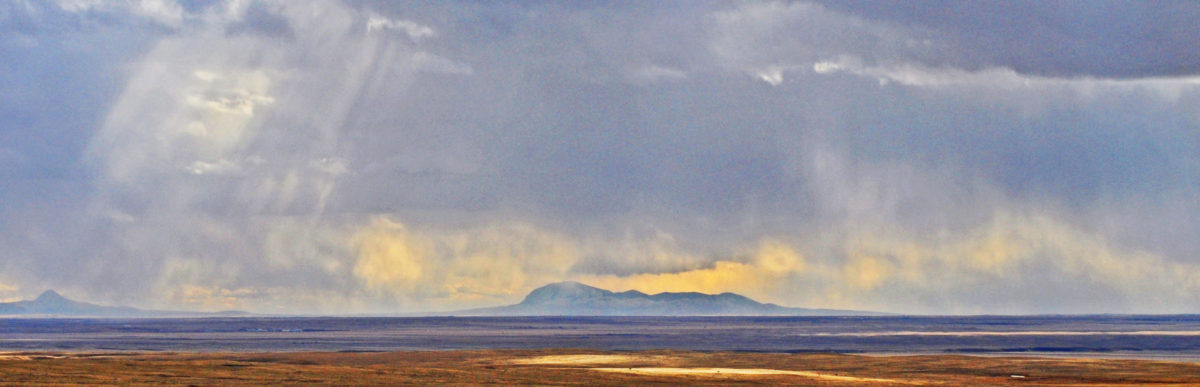
the Jordan divide

Week 9 Joshua

Yesterday I was thinking about the twelve tribes, wondering if the family glue would hold them all together.
Today I was thinking about a different family division that looked like it had the potential to put a dent in national unity.
Reuben Gad and half of Manasseh had their huge land grant on the east side of the Jordan River. It was negotiated by Moses and on the surface looked like a workable and manageable split. But under the surface it seemed like it could be trouble.
Anyway RG½M decided to build a huge altar right by the river. As soon as the other 9.5 tribes heard about it they were up-in-arms and said: the whole community of the Lord demands to know why you are betraying the God of Israel. So RG½M were seen as betrayers!
But RG½M told the 9.5s that they had their own concerns looking down the road: we have built this altar because we fear that in the future your descendants will say to ours, ‘What right do you have to worship the Lord, the God of Israel?’ They figured the 9.5s might lock the religious door.
In the end cooler heads prevailed; unity was maintained.
But some fear and mistrust and disunity is already simmering between Israel East and Israel West and how that might pan out is something I’ll need to look out for.

Note: quotes from Joshua 22:16, and see all of 16-20; and 22:24, and see 24-29 (NLT)

fair & square

Week 9 Joshua

Last year I was impressed with the land holdings that went to Judah, Ephraim and Manasseh.
This year I’m not as impressed with how things have developed for Benjamin Simeon Zebulun Issachar Asher Naphtali & Dan.
For one thing their land allotments are sketched out pretty thinly. Benjamin’s is described in eighteen verses but none of the others get more than nine. Which seems short compared to the sixty-three Judah got in chapter fifteen.
Another thing I noticed is that the lands of Zebulun Issachar Asher & Naphtali all have clear borders spelled out. For instance: the boundary of Zebulun’s inheritance started at Sarid. From there it went west, going past Maralah, touching Dabbesheth, and proceeding to the brook east of Jokneam. In the other direction, the boundary line went east from Sarid to the border of Kislothtabor, and from there to Daberath and up to Japhia… (and so on). Pretty specific. But there are no border markings for Simeon or Dan – they’re only given a list of the towns they’ll get. In fact Simeon’s tract wasn’t even an independent territory – the tribe was plunked in the middle of Judah’s land.
Reading Joshua I’ve mostly been getting a feeling of all-for-one-and-one-for-all. But I can also see where fractures might develop; where conflict might come along.

Note: Benjamin is in Joshua 18:11-28; S-Z-I-A-N-D are in 19:1-48. The Zebulun quote is from 19:10-12 (NLT). And my map shows the Z-I-A-N Quartet clustered in the north country.

odd man out?

Week 9 Joshua

Land Distribution time had arrived so a delegation from Judah came to Joshua with their claim. And Caleb came with them – the Caleb who spied out the land. So I know who I’m dealing with.
He’s called Caleb the son of Jephunneh the Kenizzite. I wonder: if Caleb was a Kenizzite why did he come with the Judah clan? Was he or wasn’t he Judah-ite?
I flip back to the Twelve Spies Story in Numbers 13. One spy was chosen from each tribe, and each spy was a tribal leader. I look down the list and in third spot – listed as Judah’s man – is Caleb son of Jephunneh. So it definitely looks like he was Judah-ite.
But why is he called a Kenizzite?
I get out a word book and check Kenizzite. It’s only used four times, three of them about Caleb. The other time is when the Lord promised Abraham land that included the territory of the Kenite and the Kenizzite – non-Israelite country for sure.
It doesn’t make it easier when a few minutes later I read that Caleb had a brother named Kenaz. My word book says a man named Kenaz – a different Kenaz but same name – belonged to the Esau-Edom family. Is an Esau-family link even possible?
I already think the bible is pretty complicated, and my take-away today is that it’s sometimes maybe more complicated than I already think it is.

Note: see Joshua 14:6; Numbers 13:2-6; Genesis 15:19; Joshua 15:17; Genesis 36:11

divvying up

Week 9 Joshua

Twelve is a short chapter. And it’s mostly names. Before I start reading I can see – visually and obviously – that the second half of the chapter is a repetitive list of names. Thirty-one lines formatted in a column, all starting with the words the-king-of.
I page forward. Names, names, names. From chapter twelve to chapter twenty-two. Hundreds of them.
After a bit I go back to twelve and start reading. It’s broken in two by geography. The first six verses name the kings east of the Jordan River; the second half is a list of the kings on the west side.
There were only two kings defeated in the Jordan East sector – Sihon and Og. I remember reading about them a couple of weeks ago. I don’t recall most of the place names so I check my bible map, but even though it’s okay it doesn’t locate all of them for me. I see Heshbon the Arnon River Aroer the Jabbok River Pisgah the Salt Sea and the sea of Chinneroth. The names I can find are all east of the Jordan.
The rest of the chapter swings over to the west. I do a quick map scan. The only pattern I detect is that the place-name list seems to start in the south and work north.
Soon land is going to be doled out to landless nomads.
No matter what I think these people were no doubt very interested in what these chapters said.

personal decisions

Week 9 Joshua

The back-to-back stories of the battles for the city of Jericho (chapter six) and the city of Ai (chapter seven) are contrasting stories.
The big and obvious contrast is that Jericho was successfully conquered; Ai was successfully not conquered.
Another pretty striking and unexpected contrast is between the Main Characters. Rahab was a citizen of Jericho. She was a totally non-Israel-ite Jericho-ite who bafflingly decided – against her own home-city and lifelong-culture – to throw in her lot with Israel. There weren’t a million people in Jericho but if there had been Rahab would be the one-in-a-million. She took an independent chancy life-or-death stand. And she was rescued.
In the battle at Ai the Israelite army was defeated. The key player was a man named Achan. Kind of like Rahab he had bafflingly taken a solitary personal decision – but against the Lord – back at Jericho. There weren’t a million soldiers fighting against Ai but if there had been Achan was the one-in-a-million who stole some booty. He took his chance; paid a high price.
In these conquest battles in Joshua it’s easy to get a sense of the Lord operating in the aggregate, taking a kind of broad brush destroy-that-whole-town approach. But with Rahab and Achan you get another sense of the weight attached to each individual taking her-or-his own individual eyes-wide-open decision.

Note: I checked my January-February reading progress. I’ve read 371 out of a total 1730 pages. Means 21.4% read with 16.7% of the year gone. So far, so good.

a seamless transition

Week 9 Joshua

There’s an interesting story in chapter five.
Joshua had crossed onto the western side of the Jordan River not far from the city of Jericho. You get the sense he was alone, although the bible doesn’t say that. What it does say is that: he looked up and saw a man facing him.
Nothing spooky about the guy, he wasn’t glowing, Joshua couldn’t see right through him. Since the guy was carrying a sword Joshua asked if he was friend-or-foe and the guy said: I am the commander of the Lord’s army. So then Joshua realized he was talking with someone from another place. An inaccessible-to-Joshua place. And Joshua realized that with this guy – this real non-guy – he would have to move with caution.
Where exactly was the place the guy came from? Hard to say but it was from somewhere where under normal circumstances Joshua couldn’t see him, hear him, or talk to him. I guess the place – in spatial or geographic terms – could have been very close. I guess it could have been a space overlapping Joshua’s space or maybe in a space that extended just beyond Joshua’s sensory-detection range. Wherever it was it wasn’t Joshua’s place.
Where I live I don’t get many reminders about a more-than-just material place. The main focus is just Alberta.
So reading a story like this one helps fill that gap.

Note: quotes from Joshua 5:13, 14 (NLT)

a simple phrase

Week 8 Deuteronomy

The day after I finished reading Deuteronomy I read Psalm 48. It begins: great is the Lord, and greatly to be praised.
I think the reason I paused at great-is-the-Lord is because it’s such a simple and clear comment about the Lord. It’s transparent, it’s undiluted, it’s direct. It’s categorical and unambiguous and precise and explicit. It doesn’t beat around the bush.
I think another reason I paused at great-is-the-Lord is because I’d just finished Deuteronomy. That big middle-section especially – from the end of chapter four through chapter twenty-nine – more than 650-verses – had kind of weighed down on me. What do I make of it all? (There is something to be made of it…the question is what?)
By contrast I don’t have to ask myself what do I make of great-is-the-Lord? An eight year-old boy could read great-is-the-Lord and understand. It’s a completely comprehensible idea told in elementary language.
It reminded me that when I’m reading through some things will make better sense to me than others. I figure that part of a bible-reader’s savvy shows up in recognizing and then negotiating his different reading environments.

lists of names

Week 8 Deuteronomy

Moses ended Deuteronomy with a blessing on each of the tribes.
The blessings were in this order: Reuben, Judah Levi Benjamin Ephraim Manasseh Zebulun Issachar Gad Dan Naphtali Asher.
I flipped back to Genesis 29-30 and saw that the actual birth-order of the boys was: Reuben Simeon Levi Judah Dan Naphtali Gad Asher Issachar Zebulun Joseph Benjamin.
I looked at the final blessing Jacob gave to his boys in this order: Reuben Simeon Levi Judah Zebulun Issachar Dan Gad Asher Naphtali Joseph Benjamin.
There’s also the two census lists I noticed a couple of weeks ago. The first one is: Reuben Simeon Gad Judah Issachar Zebulun Ephraim Manasseh Benjamin Dan Asher Naphtali. The second list is the same except it flip-flops Manasseh & Ephraim. I didn’t know what to make of that list until I realized they were grouped in four clusters of three tribes according to their geographic position around the Tabernacle – group one on the south side, two on the east, three west, four north.
Looking at the name order helped focus my mind. I kind of hoped it might also enlighten me about something or other. Which it didn’t. So…I guess that’s too bad for me.

Note: first list: Deuteronomy 33 (Simeon is missing); Jacob’s blessing list: Genesis 49 (I think the logic there is that Leah’s six boys and Rachel’s two are grouped); census lists: Numbers 1:20ff & 26:4ff (the Levites were not part of the military); position of tribes around the Tabernacle: Numbers 2.

an unresolved case

Week 8 Deuteronomy

There’s a pretty natural tendency to accelerate to highway speed zipping through the law-heavy middle section of Deuteronomy. So it would be easy to breeze by a rule that took time to explain what-to-do if someone found an unidentified corpse in a field outside of town. The ruling was that the local people had to make an animal sacrifice. You wonder what’s going on because even though the townspeople had absolutely nothing to do with the death of this dead stranger, they would still lose the sacrificed animal. But Moses explained it this way: by following these instructions and doing what is right in the Lord’s sight, you will cleanse the guilt of murder from your community

I think this paragraph registered with me was because last week I was reading about the Cities of Refuge and about how first-degree murder and manslaughter cases had to be treated. Moses explained the reason these murder laws were to be enforced: this will ensure that the land where you live will not be polluted, for murder pollutes the land.

An unsolved violent death isn’t just lost to memory, doesn’t just disappear. It has an adhesive & clingy quality. The guilt hangs around likes a toxic pollutant that dirties up the land and the community.

So a sacrifice has to be made when a murdered stranger is found out on the range because only death adequately hygienizes the land.

Note: quotes from Deuteronomy 21:9 & Numbers 35:33 (NLT)

day seven

Week 8 Deuteronomy

While I’m reading through Deuteronomy I don’t have much time to be flipping back-and-forth checking and comparing marginal notes and cross-references to Exodus-Leviticus-Numbers. If I did I know I’d find quite a few things in Deuteronomy I’ve read before.
Anyway one section I did take time to compare was the two versions of the Ten Commandments. I got out a beat-up old paperback bible that’s breaking apart in sections along the spine and set the 134-page section containing Exodus alongside my intact bible and compared the two Ten Commandments. Everything is pretty much word-for-word. Except the Sabbath commandment. It’s a long commandment –  four-verses long – and the first three verses in the Exodus-version and the Deuteronomy-version are very similar. The thing that’s different is the reason Moses gives for keeping the seventh-day special.
Exodus’ reason is: for in six days the Lord made the heavens and the earth and the sea and all that is in them and rested on the Sabbath.
But Deuteronomy says: you shall remember that you were a slave in the land of Egypt, and the Lord your God brought you out of there by a mighty hand and an outstretched arm.
The Exodus reason for Sabbath is that it’s a kind of End-of-Creation Memorial Day. Deuteronomy is different – on the Sabbath remember you were once a slave. Now you’re a free man.

Note: quotes from Exodus 20:11 & Deuteronomy 5:15 (NASB)